










Turn integration strategy into daily behaviour
Partner with specialist M&A transformation coaches

Track behaviour change, secure collaboration goals
.svg)
.avif)

Client voices






Top 10 questions about M&A integration and change management
During an M&A integration, operational strategies focus on the numbers, but it is the people who must execute them. Coaching acts as an organisational acceleration mechanism that directly addresses this human side of the deal. It forms the foundation of effective M&A change management by equipping leaders to navigate ambiguity, aligning newly formed management teams, and driving the behavioural shifts required to make the transition a success
The post-merger integration (PMI) phase brings intense execution pressure, team integration challenges, and cultural friction. While operational teams focus on combining systems, M&A HR leaders must ensure business performance doesn't stall. Coaching is critical during this active phase because it directly supports leaders and middle managers navigating uncertainty, helping them build cross-functional trust and maintain engagement when disruption is at its peak.
Between 70% and 90% of M&A transactions fail to meet their objectives. 60% of post-close failures trace back to cultural misalignment, rather than financial or operational errors. A lack of leadership alignment and treating employee resistance as an information deficit are common missteps.
M&A change management addresses the behavioural and cultural disruptions of a deal. Effective change management in mergers and acquisitions involves identifying critical roles, aligning leadership teams, and deploying strategies to sustain engagement while the organisation is being reshaped.
Managing M&A culture integration begins pre-deal with cultural due diligence to assess compatibility. Post-close, cultural integration in mergers and acquisitions involves actively supporting newly integrated leadership teams, reducing friction through cross-cultural collaboration support, and embedding new behaviours across both organisations.
Acquired talent is 2x more likely to leave compared to regular hires, with 47% leaving within the first year. Retention requires M&A HR leaders to identify essential talent early and deploy targeted support to manage the pressure and uncertainty they face.
Middle managers are the execution engine. They are tasked with leading teams through transformation, executing the M&A communication plan, managing frontline anxieties, and delivering business performance amidst high ambiguity.
While operational timelines vary, the behavioural and cultural shifts are ongoing. The process moves from pre-deal alignment through post-close integration, and finally into long-term synergy realisation, requiring sustained leadership support throughout.
Coaching acts as an organisational acceleration mechanism for acquisition integration. It helps achieve leadership alignment, reduces early talent attrition, increases manager confidence, builds trust, and ensures greater adoption of new ways of working.
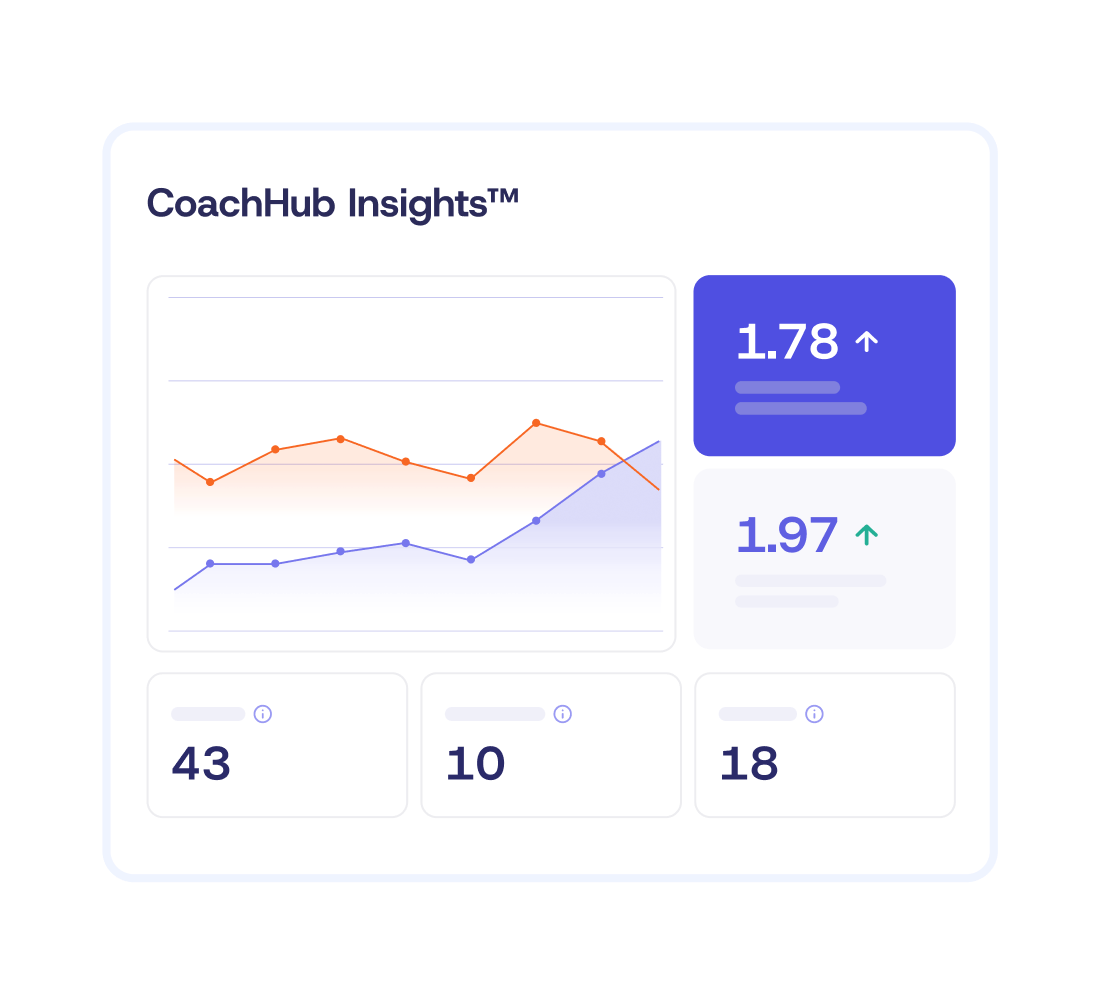
While financial metrics track structural merger integration, the true success of PMI is measured by behavioural adoption. CoachHub Insights provides real-time visibility into capability progression, manager confidence, and cross-functional trust, demonstrating the performance gains of behavioural change