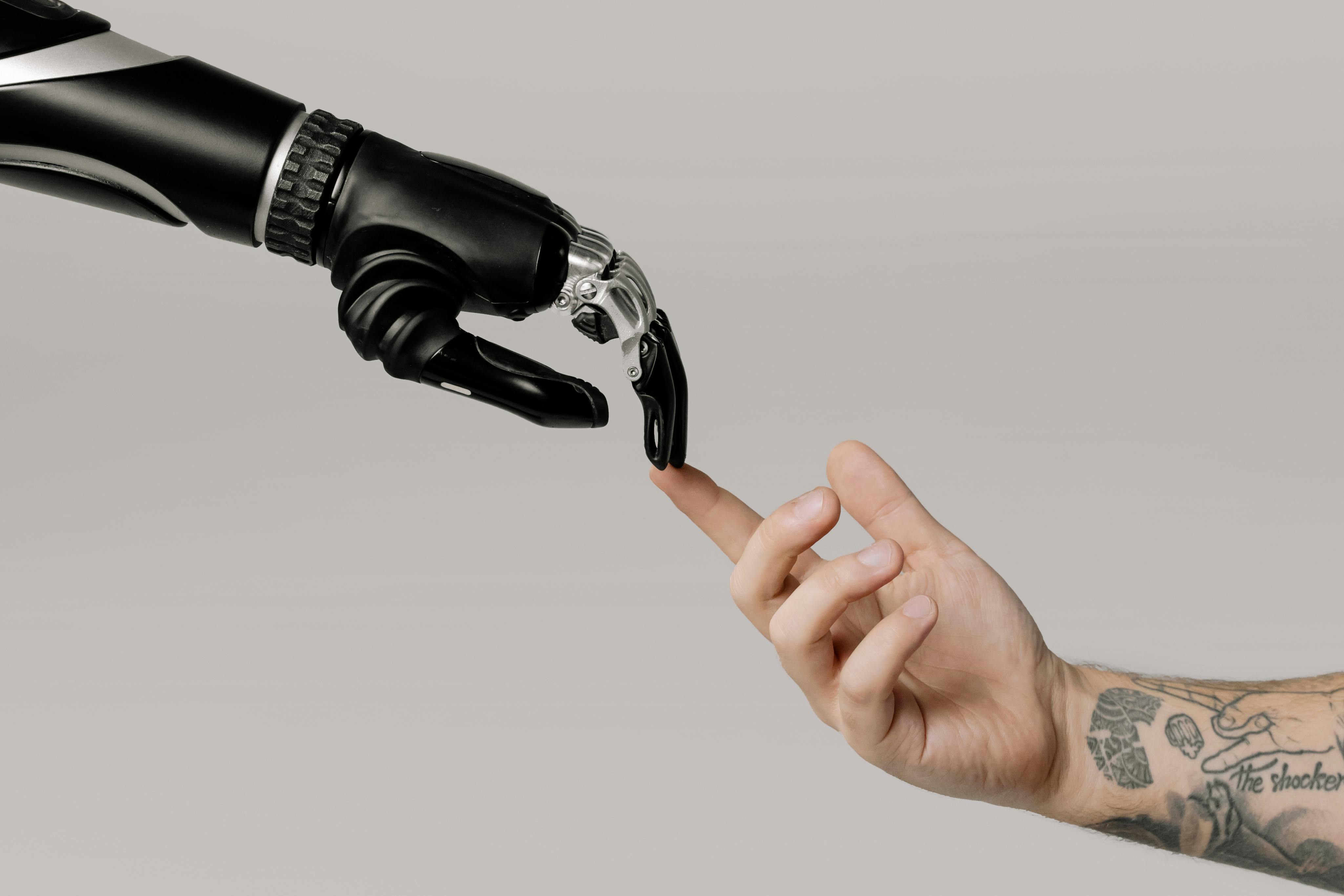
AI adoption challenges: why most organisations stall after deployment

AI adoption challenges: why most organisations stall after deployment
The main challenges with AI adoption are not technical. They are human. Many organisations stall after deployment because they underinvest in change management, skills development and habit change at the individual level. Only 26% of organisations report real business value from AI (BCG, 2024). While data readiness, governance and integration pose real obstacles, the biggest issue is the gap between new technology and workforce readiness that only structured, scalable behaviour change can close.
We’ll explain why this happens and provide practical steps for CHROs and transformation leaders. You will find three main recommendations: audit behavioural adoption metrics, expand AI literacy outside technical teams and provide structured coaching for managers leading change. These actions can turn AI investments into meaningful results.
The scaling gap: why pilots succeed but larger rollouts stall
Deploying AI does not mean it is truly adopted. McKinsey's 2024 Global AI Survey found that 72% of organisations use AI in at least one area, but most struggle to expand beyond a few isolated examples.
The factors that help pilots succeed do not carry over to larger rollouts. Small tests work because they get executive attention, use selected teams and have a narrow focus. A pilot group of 15 enthusiastic early adopters does not predict how 5,000 employees will react when their daily work changes.
A successful pilot often breeds unrealistic expectations. When the wider rollout meets resistance, leaders mistake normal friction for failure. The technology launches, but usage stays low.
According to an IBM report, limited AI skills, data intricacy and ethical concerns rank among the top barriers preventing organisations from fully deploying AI, helping explain why significant investments do not always transform work processes.
Data readiness is a people and process issue
Data quality is the most commonly named technical barrier to AI adoption. According to IBM's Global AI Adoption Index, 33% of large organisations cite data intricacy and quality as a top barrier.
Treating data readiness as only a technical problem misses the real issue. Data quality suffers because ownership is divided across teams, standards differ between departments and people resist sharing information.
IT assumes the business owns the definitions. Business teams assume IT owns the setup. No one owns the daily habits. Siemens set up cross-functional data governance councils to fix this ownership gap across its industrial AI programmes.
HR leaders play a direct role here. Data literacy (the ability to read, question and use data) is a workforce skill, not a technology feature. Building this skill is a change management challenge that falls within the CHRO's responsibilities.
The AI skills gap goes past technical talent
The AI skills gap extends far beyond the shortage of data scientists and ML engineers. According to the World Economic Forum's Future of Jobs Report 2025, 63% of employers say skills gaps are the single biggest barrier to transformation. The fastest-growing gaps are in AI literacy for non-technical roles.
CHROs should own AI literacy alongside the CTO. Companies such as Unilever, which embedded AI literacy in their leadership programmes rather than isolating it as a technical course, report faster adoption and less resistance.
This approach requires investing in coaching for managers who will lead teams using AI. Coaches help these managers interpret AI results, handle team concerns and model new behaviours. Coaching at the manager level addresses trust, literacy and resistance simultaneously, producing lasting adoption instead of short-term training that quickly fades.
Legacy systems, governance, and the barriers leaders hear most often
Leaders most often cite integration complexity, regulatory compliance and budget limits as barriers to AI adoption. These are real issues, but they frequently mask the harder challenge: changing how people work.
According to Deloitte's State of AI in the Enterprise report, organisations often fall into a "proof-of-concept trap." Small pilots succeed with limited teams and clean data, but scaling to production exposes infrastructure costs, integration friction and ongoing maintenance demands. The difficulty lies not just in resources but in how they get allocated.
For organisations in the DACH region, the EU AI Act and GDPR bring specific governance requirements. Works councils must be involved in decisions about AI systems that affect working conditions. Companies often spend 85 to 90 percent of their AI transformation budgets on platforms and infrastructure, leaving little for training and support.
Deutsche Telekom changed this pattern by allocating a significant share of its AI budget to workforce readiness, including coaching for managers. This shift came after early rollouts delivered strong technical results but poor behavioural adoption.
Why ROI stays elusive: measuring adoption, not just deployment
Most organisations track the wrong metrics for AI success. Technical KPIs like model accuracy, uptime and processing speed confirm the technology works but reveal nothing about whether people have changed how they work. BCG's 2024 AI research found that only 26% of organisations report real business value from their AI spending.
Behavioural adoption KPIs tell a different story. They include process change rates, tool-learning velocity, manager enablement scores and reductions in legacy-process usage. These indicators predict whether AI spending will create business value. Connecting coaching ROI to adoption metrics gives CHROs a way to demonstrate value that technical dashboards cannot capture alone.
Change management: the missing driver for adoption
Structured change management is the most underfunded part of AI transformation. Prosci's Best Practices in Change Management report shows that projects with strong change management are six times more likely to reach their goals.
Middle managers are vital to adoption. They connect executive strategy with frontline work and decide each day whether AI-powered processes are supported or ignored. Clients who used structured coaching for managers during AI rollouts saw a shift from passive compliance to active support.
With a digital coaching platform, organisations can deliver structured support to managers across locations and roles. This is not a perk, it is infrastructure for adoption. Coaching builds the trust, skills and behaviour changes that training alone cannot sustain.
From deployment to adoption: what CHROs should do next
The pattern is clear: organisations invest in AI technology, deploy it well and watch adoption stall at the human layer. Breaking this cycle requires three concrete moves.
First, audit behavioural adoption metrics. If the only KPIs tracking AI success are technical, the organisation is blind to whether anything has actually changed. Second, extend AI literacy programmes past technical teams to every function touched by AI-powered workflows. Third, set up structured coaching for the managers expected to lead through this shift. They are the make-or-break layer.
Explore how scalable coaching through CoachHub's platform helps organisations move from installed technology to lasting behavioural change, closing the adoption gap where it matters most.



.avif)